Box Jellyfish and Dugongs
- 30.03.2026
- 0
Grade Level: 9
Duration: 45 min.
Objectives:Students will describe key characteristics, habitats, and behaviors of box jellyfish and dugongs.
- Students will compare a dangerous animals (box jellyfish,dugong).
- Students will understand why both animals are important to marine ecosystems and face threats.
- Engage (10–15 minutes) – Hook the students!
Show striking photos of both animals and ask questions to spark curiosity.
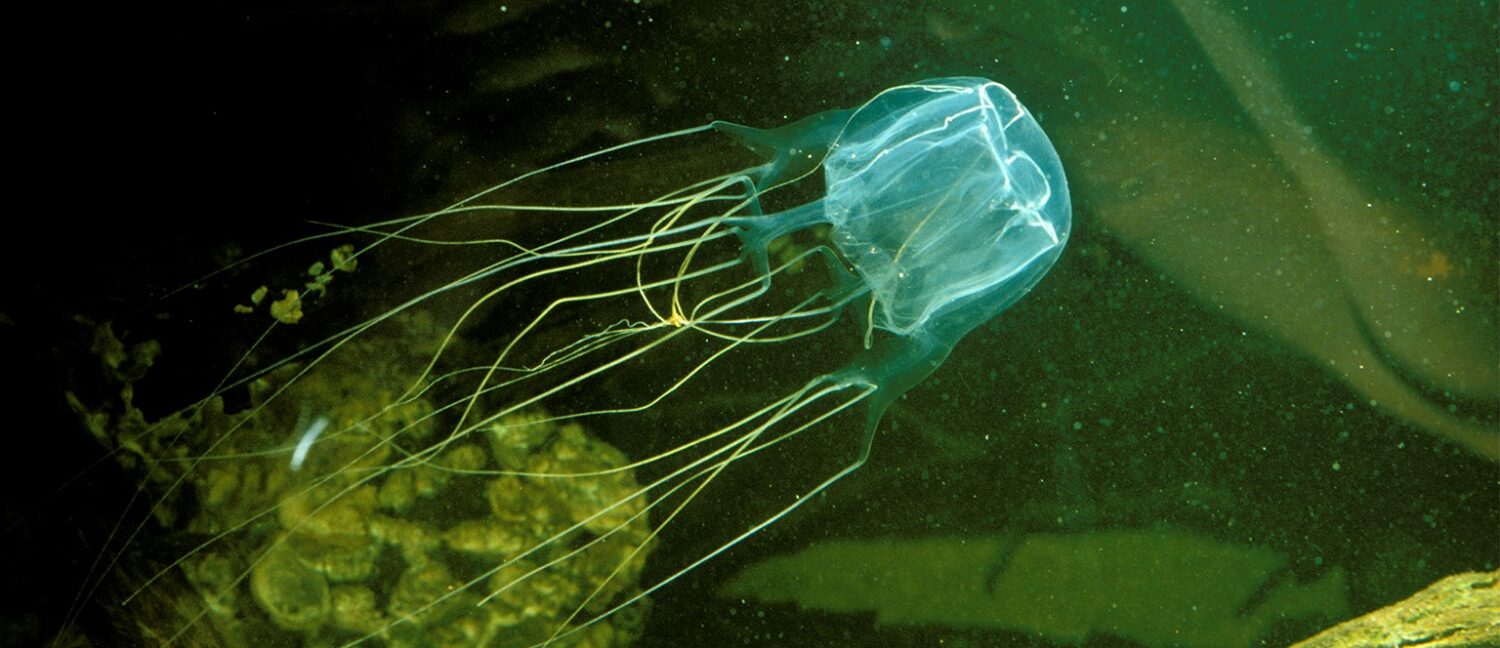
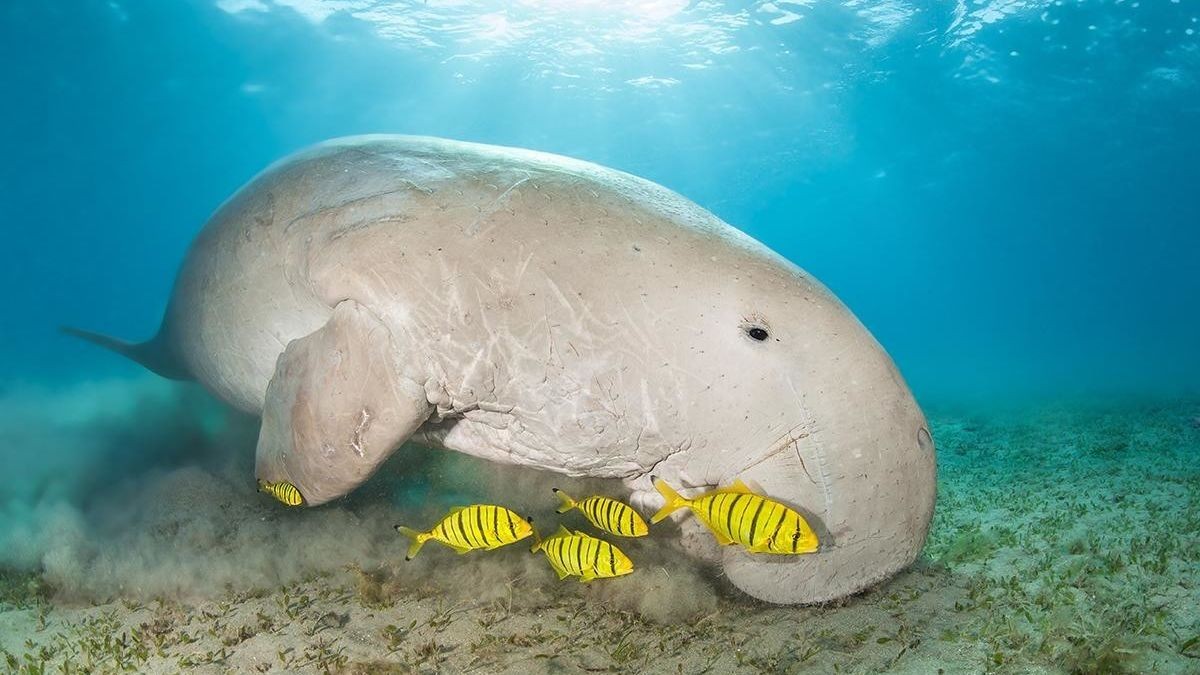
- Display images of a box jellyfish (translucent, box-shaped with long tentacles) and a dugong (round, gentle «sea cow» grazing on seagrass).
- Ask:
- «What do you think this creature is? Is it dangerous or friendly?»
- «Have you heard of animals that look like jelly or sea cows?»
- «Which one would you rather swim with… and why?»
Quick poll or think-pair-share: One is one of the most venomous sea creatures → the other is a peaceful, plant-eating mammal!
- Explore (15–20 minutes) – Hands-on discovery
Students rotate through stations or do a gallery walk with printed images/facts
Station 1: Box Jellyfish
- Looks like a cube/box with 4 sides.
- Has up to 24 eyes and can swim fast (up to 2 m/s).
- Tentacles up to 3 meters long with deadly venom (attacks heart, nerves, skin).
- Lives in warm coastal waters (e.g., near Australia, Great Barrier Reef in summer).
- Eats fish and shrimp → stuns/kills prey quickly.
Station 2: Dugong
- Called «sea cow» because it grazes on seagrass like a cow eats grass.
- Grows up to 3 meters long, weighs up to 400 kg.
- Has a fluked tail (like whales), never goes on land.
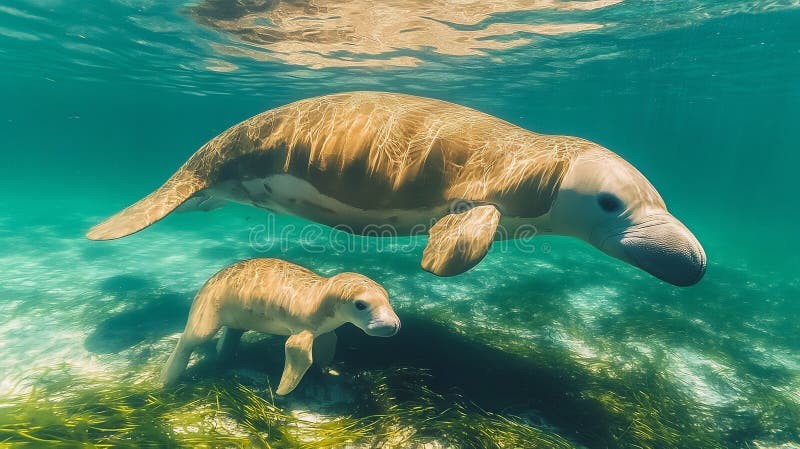
- Lives in shallow seagrass beds in warm waters (Indian/Pacific Oceans, important in Great Barrier Reef).
- Eats only plants (herbivore), helps keep seagrass healthy.
Activity: Students draw quick sketches or make a Venn diagram comparing the two (e.g., both in warm oceans, but one stings, one eats plants).
- Explain (15 minutes) – Direct teaching & key facts
Teacher-led discussion with visuals.
Box Jellyfish
- Not a «true» jellyfish but more advanced (has eyes, can see and actively hunt).
- One of the most venomous animals in the world
- Sting can be fatal to humans → wear stinger suits in risky areas.
- Role: Predator that controls small fish populations.
Dugong
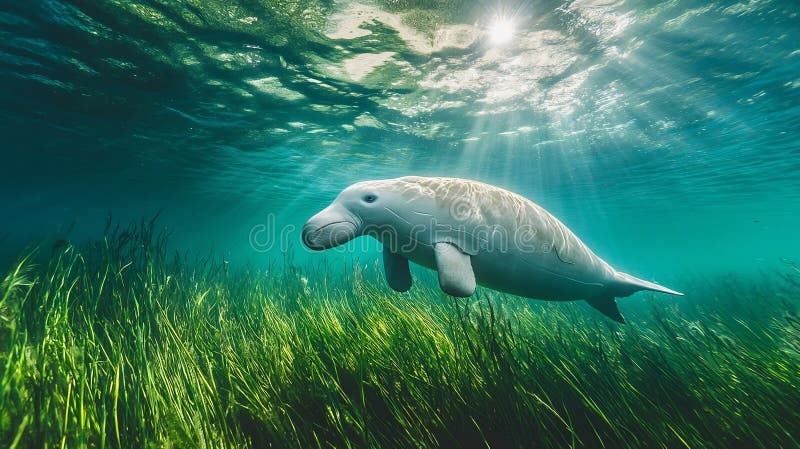
- Marine mammal related to elephants (not whales).
- Gentle, slow swimmer (~10 km/h).
- Only fully herbivorous marine mammal → eats seagrass, helps ecosystems by «mowing» meadows.
Both live in places like the Great Barrier Reef → box jellyfish in coastal/river mouths (summer), dugongs in seagrass areas.
- Elaborate/Extend (15–20 minutes) – Deeper thinking & application
Exercise 3 p.69 Read the text (listening) and answer the questions
1)What did sailors think about dugongs in the past?
2)Which two animals does Joe say are like dugongs?
3) Why dugongs have to put their noses out of the water?
4)Which part if dugong’s body helps it to stand up?
- Evaluate (5–10 minutes) – Check understanding
Quick exit ticket or quiz:
- What makes box jellyfish so dangerous? (Venom in tentacles, fast swimmer, eyes)
- What does a dugong eat, and why is it called a «sea cow»?(Seagrass)
- Name one similarity and one difference between them.
- Why are both important to protect?
Homework: Retell the text,WB p.59
Тургунбаева Айзада, Бишкек шаарындагы №94 мектеби
Комментарийлер